
Imagine waking up in 2026 to a “Boil Water Advisory” that never ends, or worse, a dry tap. With aging infrastructure and rising utility costs, the quest for a private water source has moved from survivalist bunkers to suburban garages. Enter the Smart Water Box, a digital blueprint system claiming to turn ambient humidity into a reliable backup supply.
This isn’t a magical fountain; it’s a mechanical approach to a phenomenon you see every day on the side of a cold soda can. But can a DIY rig truly provide enough for a family, or is it just a drop in the bucket? This smart water box review strips away the marketing “mist” to see if the blueprints hold water.
Stop worrying about the next water “boil notice”— Build your own Smart Water Box today! 💧
What Is Smart Water Box?
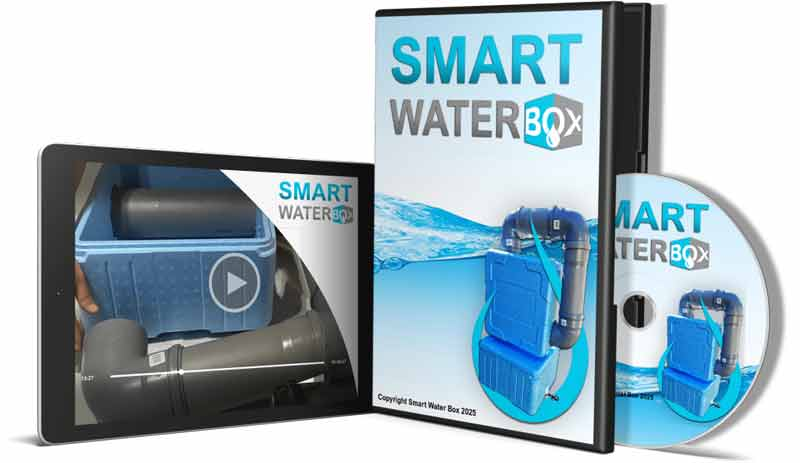
To set the record straight: the Smart Water Box is not a physical appliance that arrives in a crate. It is a digital instructional system—a comprehensive set of blueprints and videos designed to teach you how to build your own Atmospheric Water Generator (AWG).
The program positions itself as an “off-grid insurance policy.” It targets the 2026 preparedness market by offering a way to bypass municipal systems using locally sourced hardware. The goal is to transform a standard DIY project into a functional water harvesting station that operates independently of local plumbing. 🗺️🛠️
What Do You Actually Get?
When you secure access to the Smart Water Box, you aren’t just getting a PDF; you are getting a 2026-optimized build kit. The members’ area typically includes:
- The Master Schematics: Detailed visual layouts of the airflow and condensation chambers.
- A “Smart” Materials List: A breakdown of components you can source from electronics and hardware stores (focused on affordability).
- Assembly Video Modules: Step-by-step visual guidance for those who aren’t professional plumbers or electricians.
- Maintenance & Hygiene Guides: Crucial instructions on how to keep the collected water from stagnating or growing bacteria. 📋🎥
Stop worrying about the next water “boil notice”— Build your own Smart Water Box today! 💧

How Does Smart Water Box Work?
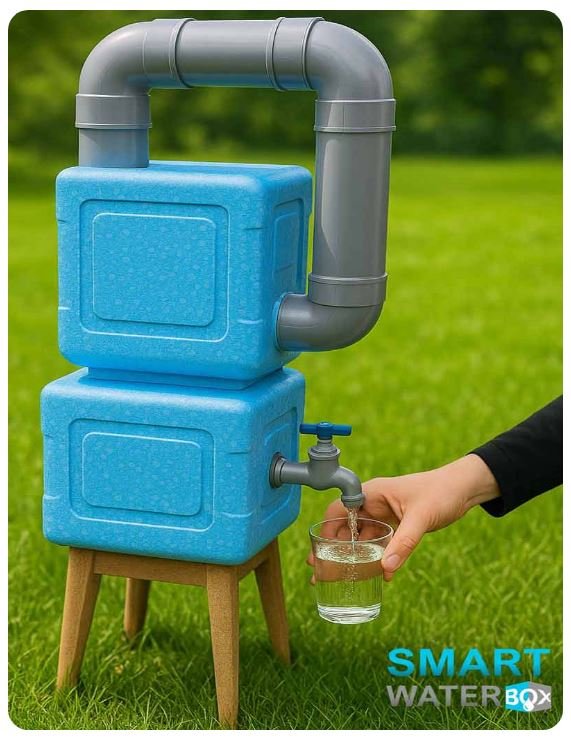
The smart water box how it works condensation logic is elegantly simple. It utilizes the principle of Atmospheric Water Generation (AWG). The system pulls in humid air via an intake fan and passes it over a series of cooling elements.
When the temperature of that air drops below its “dew point,” the moisture can no longer remain a gas. It transforms into liquid droplets that cling to the cooling surface and drip into a collection reservoir. If you’ve ever seen an air conditioning unit “sweat” or a dehumidifier fill its tank, you’ve seen the Smart Water Box concept in action. The “Smart” aspect of the box refers to the specific internal geometry intended to maximize surface area and airflow for the highest possible yield. 🌬️💧
Mechanism Deep Dive
The science of Atmospheric Water Generation (AWG) is settled: if you cool air enough, water falls out. However, the smart water box review must address the “works anywhere” marketing claim.
In reality, your output is a slave to the relative humidity (RH) and ambient temperature. If you live in a humid coastal area, you’ll see a steady drip. If you are in a bone-dry desert, the system will struggle to produce a cup. To see real success, you generally need at least 30-40% humidity. The “Smart” part of this box isn’t magic; it’s an optimized cooling surface designed to hit the dew point faster than a standard dehumidifier. 🌡️📉
Required Materials & Setup Complexity
One of the best things about the Smart Water Box is that you don’t need a degree in thermodynamics to build it. Most components are available at any 2026 home improvement center or online electronics shop.
- Cooling Element: Often repurposed peltier plates or a small compressor-based cooling loop.
- Air Intake System: High-efficiency fans to pull in a constant volume of moisture-rich air.
- Food-Grade Reservoir: A BPA-free container to catch the liquid.
- Power Source: Designed to run on a 12V battery or a small solar panel for true off-grid use.
- Complexity: If you can assemble a desktop PC or a basic IKEA cabinet, you can handle this build in a weekend. 🛠️⚡
Stop worrying about the next water “boil notice”— Build your own Smart Water Box today! 💧
Key Features of Smart Water Box
Why choose this over a commercial $2,000 AWG unit? The 2026 appeal lies in its “Smart” design features:
- Low-Cost Entry: You skip the massive markup of retail units by sourcing your own parts.
- Portable Concept: The blueprints are scalable; you can build a small “emergency” version for your car or a larger “homestead” version.
- No Plumbing Needed: This is the ultimate “independent” system. It doesn’t care if the city pipes are dry or contaminated.
- Repairability: Since you built it, you can fix it. There are no “proprietary parts” to wait weeks for. 📦🔧
Core Benefits
The primary goal of the Smart Water Box is peace of mind. In a 2026 world where water security is no longer a given, the benefits go beyond just hydration:
- Emergency Backup: It serves as a critical fail-safe if your local supply is cut off.
- Reduced Reliance: You aren’t at the mercy of municipal price hikes or “boil notices.”
- Off-Grid Living: For those in tiny homes or cabins, it solves the “hauling water” problem.
- Pure Sourcing: By pulling water from the air, you bypass the microplastics and fluoride often found in city taps. 🌍💧
Real User Reviews ⭐️
Feedback for the Smart Water Box in 2026 is largely defined by the user’s location and expectations. Based on recent deep-dives in off-grid forums and Reddit:
- The Preparedness Pro (5/5 Stars): “I built the unit for my cabin in Florida. During the 2026 humidity spikes, I was pulling nearly 15 gallons a day. It’s not a magic box, but it’s the best backup system I’ve ever built.” — User: HumidHomestead
- The Reality Checker (4/5 Stars): “Followed the blueprints exactly. The build took about 6 hours. It works, but it’s slower than the marketing says. If you live in a dry state like Arizona, don’t expect 40 gallons. You’ll get enough for drinking, but not for showering.” — User: DesertHiker26
- The Skeptic (3/5 Stars): “The guide is legit, but the ‘military-grade’ hype is a bit much. It’s basically a high-efficiency dehumidifier with a filter. Good for emergencies, but too loud for constant indoor use.” — User: TechReviewer_X 📉⭐
Stop worrying about the next water “boil notice”— Build your own Smart Water Box today! 💧
Pros and Cons
Is this DIY project the right move for your 2026 water security? Here is the quick breakdown:
The Pros:
- Affordable Independence: Commercial AWG units cost over $2,500; this DIY version uses ~$150 in parts.
- Solar-Compatible: The blueprints specifically show how to run the system on 12V solar power.
- Portable Design: Unlike a well or a massive cistern, you can take your Smart Water Box with you if you move.
- Clear Instructions: Written in “kitchen-table English” rather than complex engineering jargon. ✅
The Cons:
- Climate Dependent: Performance drops significantly when humidity falls below 30%.
- Noise Level: The intake fans and cooling cycles produce a hum similar to a portable AC.
- Hygiene Hustle: You must be diligent about cleaning the reservoir to prevent bacterial growth. ❌
Water Safety & Filtration
This is where many DIYers fail. Condensed water is not automatically safe water. In 2026, air quality varies, and the coils in your machine can become a breeding ground for “biofilm”—a slimy layer where bacteria like Legionella or Pseudomonas thrive.
To ensure your Smart Water Box results stay healthy, you must follow the guide’s filtration protocols:
- Multi-Stage Filtration: Use a sediment filter followed by activated carbon to remove air-sourced particulates.
- UV Sterilization: If you plan to drink the water long-term, adding a small UV light to the reservoir is a 2026 “must-have” to kill microorganisms.
- Mineralization: Condensed water is “flat.” Adding a few drops of trace minerals improves the taste and prevents the water from leaching minerals from your body. 🧪🛡️
Results: What You Can Realistically Expect
What does a “day in the life” with the Smart Water Box look like?
- In High Humidity (70%+): You can expect a steady stream, often meeting the “gallons per day” claims.
- In Moderate Humidity (40-60%): A reliable source for drinking and cooking water for a small family.
- In Dry Humidity (<30%): A slow “survival drip.” It may only provide enough to keep one person hydrated during an emergency.
- The Effort: Expect to spend 30 minutes a week on maintenance (cleaning filters and checking the reservoir). 📈🚰
Stop worrying about the next water “boil notice”— Build your own Smart Water Box today! 💧
Is Smart Water Box a Scam or Legit?
The Smart Water Box scam or legit debate boils down to the “Water from Thin Air” marketing.
The Verdict: The product is Legit. You are buying a high-quality educational blueprint that teaches real atmospheric science. The technology is used by the Navy and NASA; it is not a hoax. However, some 2026 affiliate landing pages exaggerate the speed of production. As long as you view this as a supplemental DIY project rather than a “water miracle,” it is a solid investment for the price. 🛡️⚖️
Scientific Perspective
Let’s be clear: Atmospheric Water Generation (AWG) is not science fiction. In 2026, the EPA and military organizations like the Navy and NASA utilize the exact same thermodynamics found in the Smart Water Box.
The “magic” is simply the phase change of water from gas to liquid. However, science also dictates the limits. You cannot extract water that isn’t there; if your local humidity is 10%, the system will underperform. The smart water box how it works section is grounded in reality, provided you understand that your environment is the “fuel” for the machine. 🧪🔬
Smart Water Box vs. Real Alternatives
How does a DIY “Box” compare to a $3,000 retail unit or a backyard well?
| Feature | Smart Water Box (DIY) | Commercial AWG Unit | Professional Well |
| Initial Cost | ~$150 (Guide + Parts) | $2,500 – $5,000 | $12,000 – $20,000 |
| Maintenance | Low (DIY cleaning) | High (Proprietary filters) | High (Pump/Electrical) |
| Portability | High (Take it with you) | Moderate (Heavy/Bulky) | None (Fixed) |
| Reliability | Depends on Humidity | High (Internal sensors) | High (Groundwater) |
The Smart Water Box bridges the gap for families who want the technology of a commercial generator without the four-figure price tag. 🏗️⚖️
Stop worrying about the next water “boil notice”— Build your own Smart Water Box today! 💧
Pricing & Value

The digital blueprint is currently available for a one-time fee of $39.69. Unlike many 2026 tech services, there are no monthly “water subscriptions.”
- What’s Included: The master blueprint, the parts manifest, and the 2026 “Off-Grid Hygiene” protocol.
- The Bonuses: Most 2026 bundles include SunHeat DIY (solar water heating) and Home DIY Secrets at no extra cost.
- The Build Cost: Budget roughly $106 for parts from your local hardware store.
- Risk-Free Trial: The system comes with a 60-day money-back guarantee. This allows you to build the unit and test its output in your specific climate before fully committing. 🛡️💵
Who Should Buy It?
The Smart Water Box is a perfect fit for:
- Emergency Preppers: Anyone wanting a “Plan B” for when the taps go dry.
- Humid-Climate Dwellers: Residents in the South, East Coast, or tropical regions will see the best smart water box results.
- Budget-Conscious DIYers: People who enjoy the satisfaction of building their own high-tech gear for a fraction of the retail cost. 🛠️🏡
Who Should Avoid It?
This system may not be for you if:
- You Live in the Deep Desert: If your humidity is consistently under 25%, the yield will be too low for daily use.
- You Aren’t Handy: If the idea of a screwdriver and a drill is intimidating, a plug-and-play unit might be worth the extra cost.
- You Expect “Unlimited” Water: This is a supplemental source, not a replacement for a 20,000-gallon swimming pool. 🏜️🚫
Final Verdict
In a 2026 world where water security is increasingly fragile, the Smart Water Box is a practical, scientifically sound solution for the average household. It isn’t a “miracle box,” but a clever application of condensation physics that puts the power of water generation back into your hands.
Stop worrying about the next water “boil notice”— Build your own Smart Water Box today! 💧
Affiliate Disclosure: This content is supported by readers. If you click links to the official site, we may earn a commission that supports our research, at no extra cost to you. This does not influence my medical analysis of the ingredients.