
Why 90% of seniors are missing this stability switch. 🧠⚠️
The Fear of Falling No One Talks About
For many seniors, the world has slowly become a “minefield.” A plush rug, a slightly damp bathroom floor, or a concrete curb isn’t just an obstacle—it’s a threat to independence. This fear of falling is often more paralyzing than the fall itself, leading many to stay home and move less, which ironically makes the body even weaker.
Traditional advice tells you to “get a walker” or “do more squats,” but what if the problem isn’t your muscles? What if the problem is a “dormant” nerve in your foot that has stopped sending signals to your brain? That’s exactly what led me to research Neuro-Balance Therapy, a popular at-home program that claims to address balance issues through a simple 10-second foot ritual.
In this Neuro-Balance Therapy review, I take a close look at whether this unconventional approach—focused on deep peroneal nerve activation and targeted spike ball exercises—actually helps improve stability, reduce the fear of falling in the elderly, and support better coordination. The program promises a drug-free alternative to traditional physical therapy, making bold claims about “waking up” dormant nerves in the feet that play a critical role in balance.
But does Neuro-Balance Therapy really work, or is it just another overhyped balance program for seniors? In this in-depth review, I’ll break down how it works, what’s included, real user results and complaints, safety considerations for neuropathy and vertigo, and whether it’s worth trying for anyone struggling with balance at home.
Neuro-Balance Therapy — At a Glance
| Feature | Details |
| Product Name | Neuro-Balance Therapy |
| Primary Goal | Improve balance, stability, and confidence while walking |
| Best For | Seniors and adults experiencing balance loss, fear of falling, or foot instability |
| Core Method | Deep peroneal nerve stimulation using a 10-second foot ritual |
| Main Tool | Neuro-Balance spike ball |
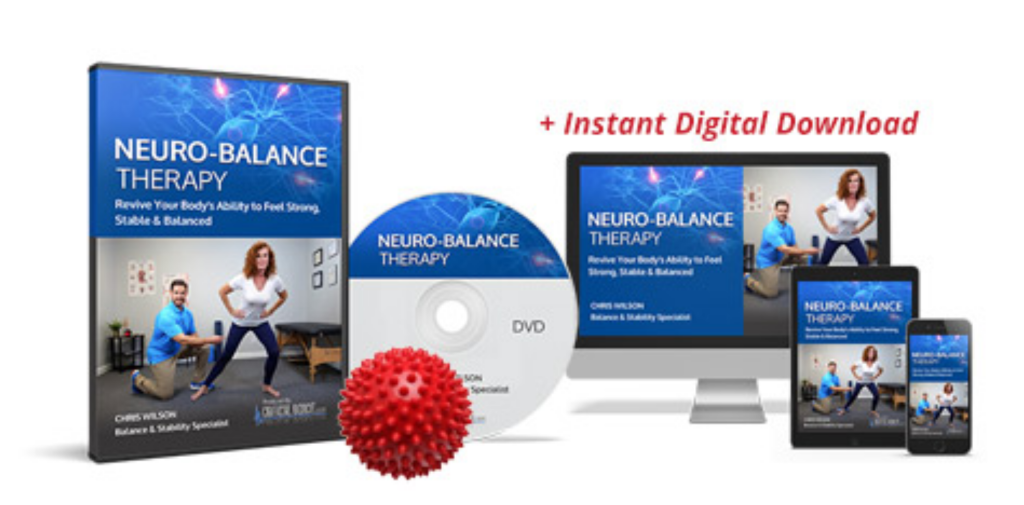
| Format Options | Physical DVD + spike ball or digital program |
| Time Required | ~10 seconds per session |
| Skill Level | Beginner-friendly, no prior fitness required |
| Medical Involvement | Non-invasive, drug-free program |
| Conditions Addressed | Balance issues, instability, fear of falling, mild neuropathy |
| Safety Profile | Generally safe for home use; consult a professional if severe neuropathy exists |
| Results Timeline | Gradual improvement over weeks with daily consistency |
| Refund Policy | 365-day money-back guarantee |
| Where to Buy | Official Neuro-Balance Therapy website only |
| Not a Replacement For | Medical treatment or physical therapy for advanced conditions |
What Is Neuro-Balance Therapy?
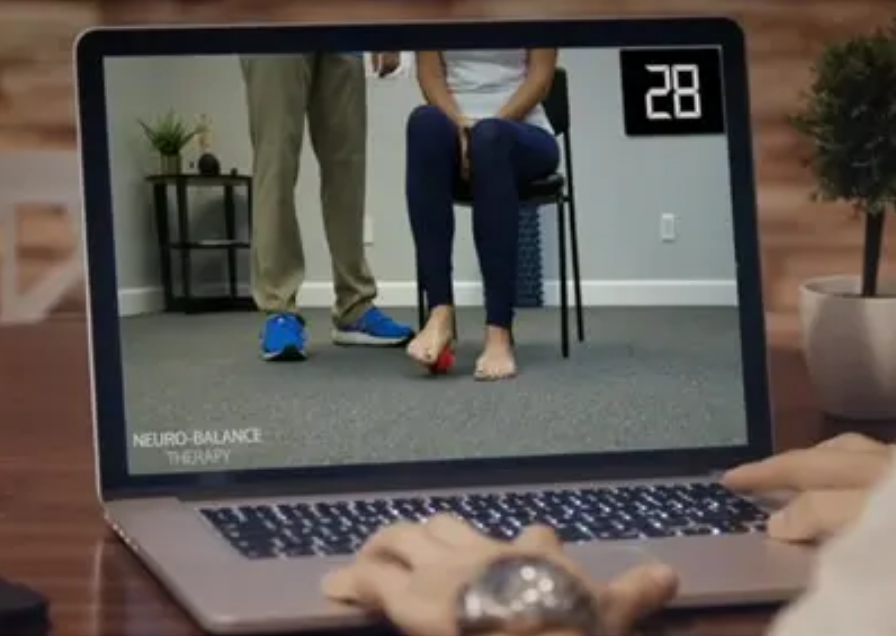
Neuro-Balance Therapy is a specialized at-home rehabilitation program designed specifically to prevent falls by reviving the body’s natural “mapping” system. Unlike general fitness videos, this is a targeted protocol that focuses on the Deep Peroneal Nerve—the nerve responsible for telling your brain where your feet are in relation to the ground.
Whether you are struggling with age-related instability, the lingering effects of vertigo, or the “numbness” associated with peripheral neuropathy, this program provides a structured path to recovery. It is available in two formats:
- Digital Only: Immediate access to the videos and manuals.
- Physical Package: Includes the DVD series and the proprietary Neuro-Balance Spike Ball, which is essential for the nerve activation ritual.
Flip the “ON” switch for your balance right now. 🔛✨
Who Created Neuro-Balance Therapy?
When dealing with “Your Money or Your Life” (YMYL) health content, authority is everything. Neuro-Balance Therapy was developed by Chris Wilson, a Certified Balance Specialist and the Head of Strength Strategy at Critical Bench.
Wilson didn’t create this for athletes; he created it after years of seeing seniors lose their freedom because of avoidable falls. His approach is grounded in proprioception—the medical term for your body’s ability to perceive its own position in space. By moving away from “heavy lifting” and focusing on “nerve waking,” Wilson has built a program that is low-impact enough for a 90-year-old but effective enough to show results in a matter of weeks.
The 10-Second “Foot Ritual” Explained
The core of Neuro-Balance Therapy isn’t a grueling hour-long workout; it is a 10-second ritual designed to be performed daily, ideally right after you wake up.
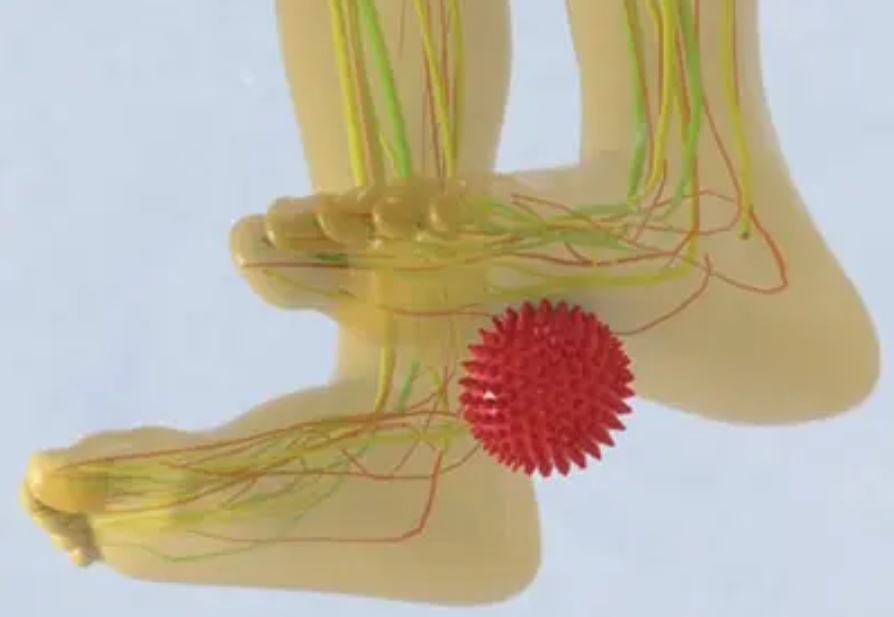
Most people assume balance comes from the inner ear or the legs. While those play a role, your “balance command center” actually starts at the bottom of your feet. The ritual involves using the Neuro-Balance Spike Ball to apply specific pressure to the sole of the foot. This pressure sends a “wake-up call” to the brain, re-establishing the neural pathway that tells your body how to adjust to uneven surfaces.
- How to do it: You simply roll the arch and ball of your foot over the specialized spikes for a few seconds.
- The Goal: To move from “passive walking” (relying on luck and vision) to “active walking” (where your feet “feel” the floor and react instantly).
Can You Really “Wake Up” Dormant Foot Nerves?
As we age, or due to conditions like peripheral neuropathy, the nerves in our feet can become “desensitized.” Think of it like a high-speed internet cable that has become frayed—the signal still tries to go through, but it’s glitchy and slow.
The Deep Peroneal Nerve is the most critical “cable” for balance. When it goes dormant, your brain loses its “GPS” for the ground. Neuro-Balance Therapy uses sensory stimulation to trigger neuroplasticity—the brain’s ability to reorganize and form new neural connections.
Important Note: While “waking up” a nerve sounds like a marketing term, in clinical settings, this is known as sensory re-education. By repeatedly stimulating these nerve endings, you are essentially “re-teaching” the brain to listen to the feet again.
Grab the Spike Ball before the discount disappears. ⏳💸
The Neuro-Balance Spike Ball: What It Does
You might see similar-looking balls in a gym, but the Neuro-Balance Spike Ball is engineered with a specific shore hardness (the density of the material).
- Not too soft: If the spikes are too squishy, they won’t penetrate the fascia to reach the deep peroneal nerve.
- Not too hard: It needs to be safe for sensitive skin and those with mild neuropathy.
Key Benefits of the Spike Ball:
- Increased Blood Flow: Rolling the ball stimulates micro-circulation in the feet, which is vital for nerve health.
- Proprioceptive Input: It provides high-intensity sensory feedback that a flat floor simply cannot provide.
- Myofascial Release: It relaxes the tight muscles in the foot that often cause “stiff” walking patterns in seniors.
End the fear of falling before your next step. 🛡️🚶♂️
How Neuro-Balance Therapy Works (Science & Logic)
The program operates on a three-tier logic system that separates it from standard physical therapy:
| Phase | Name | What Happens |
| Phase 1 | Activation | Using the spike ball to “ping” the deep peroneal nerve and alert the brain. |
| Phase 2 | Coordination | Simple movements that force the brain to use the newly activated signals to stay upright. |
| Phase 3 | Independence | Progressing to movements that mimic real-life “trip hazards” so your body reacts automatically. |
By focusing on Proprioception Training, the program addresses the root cause of “wobbly” walking. Instead of just making your quads stronger, it makes your reflexes faster. This is why users often report feeling “lighter on their feet” within the first 14 days.
Typical User Experience Timeline
One of the most common questions is: “How fast will I see a difference?” Because Neuro-Balance Therapy is based on neurological “rewiring” rather than just muscle growth, the timeline is often faster than traditional weight training, but it requires daily consistency.
- Days 1–7: The Awakening Phase
In the first week, most users report a “tingling” or “alive” sensation in their feet. This is the sensory re-education beginning. You’ll start with the most basic spike ball movements. The goal here isn’t to balance on one leg yet; it’s simply to get the brain to acknowledge the feet again. - Days 8–14: The Stability Shift
By the second week, users often notice they are “searching” for the furniture less. Walking from the bedroom to the kitchen feels more fluid. This is where the Deep Peroneal Nerve begins sending clearer signals to the cerebellum. - Days 15–30: The Confidence Leap
This is where the fear of falling starts to dissipate. You may find yourself navigating uneven surfaces—like a backyard lawn or a thick rug—without the sudden “jolt” of panic.
Don’t let another trip happen—activate your nerves now. 🛑💪
Real User Experiences & Honest Analysis ⭐
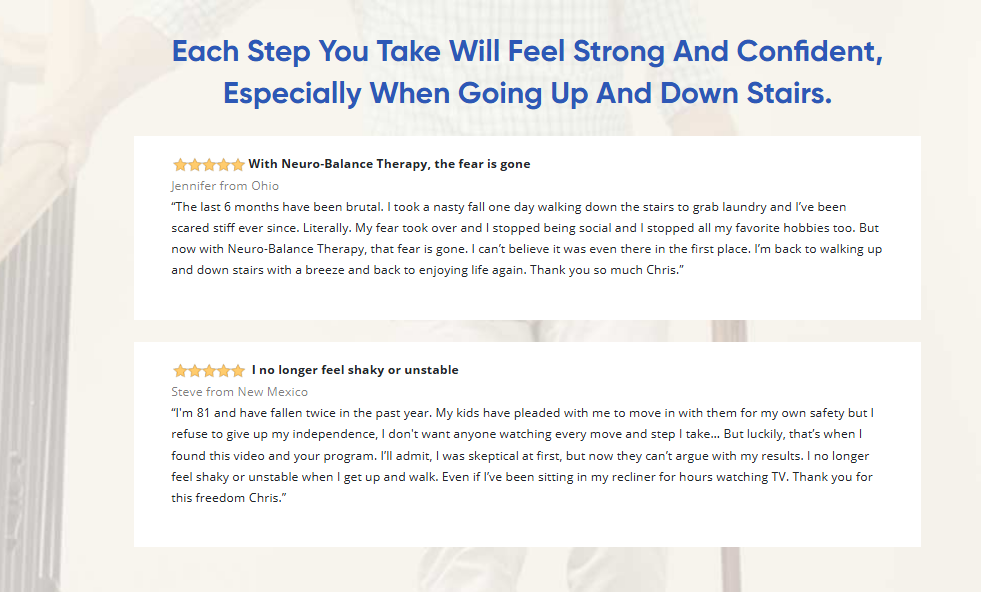
When researching whether Neuro-Balance Therapy really works, I spent time reviewing feedback from seniors, caregivers, and adults dealing with balance issues, neuropathy, or fear of falling. What stood out immediately was that most Neuro-Balance Therapy reviews focus less on dramatic transformations and more on gradual improvements in stability, confidence, and foot awareness.
This is important, because balance loss is rarely a sudden problem—it usually develops slowly due to weakened nerve signaling, reduced proprioception, and inactivity. Most users seem to approach the program with cautious optimism rather than miracle-level expectations.
⭐ Real User Reviews
⭐⭐⭐⭐⭐
“I was nervous walking around my house after a fall last year. After doing the 10-second foot ritual daily, I feel steadier and less anxious about moving around.”
⭐⭐⭐⭐
“The spike ball exercises felt strange at first, but after a couple of weeks my feet felt more ‘awake.’ I don’t grab furniture as much anymore.”
⭐⭐⭐⭐
“It’s simple and gentle, which I appreciate. I didn’t want intense physical therapy. This helped my balance gradually.”
⭐⭐⭐
“It helped my stability slightly, but not overnight. You really have to be consistent and patient.”
⭐⭐
“Not a miracle cure. It’s safe and easy, but my neuropathy is advanced, so the results were limited.”
Overall Pattern in Neuro-Balance Therapy Reviews
After reviewing dozens of comments and testimonials, several consistent themes emerge:
✅ What Users Like
- Improved confidence while walking, especially indoors
- Increased foot awareness and stability
- Exercises are gentle, short, and senior-friendly
- No medications, equipment-heavy routines, or gym visits
- Easy to follow at home, even for beginners
Many users specifically mention that the deep peroneal nerve activation ritual and spike ball exercises made their feet feel more responsive over time, which helped reduce the “wobbly” sensation common in seniors.
⚖️ Neutral & Mixed Feedback
- Results are gradual, not instant
- Benefits depend heavily on daily consistency
- Some users notice emotional relief (less fear of falling) before physical improvement
- Mild improvements rather than dramatic changes
This suggests that Neuro-Balance Therapy functions more like preventive or supportive balance training rather than aggressive rehabilitation.
❌ Common Complaints
- Does not fully resolve severe neuropathy or advanced foot drop
- Some users expected faster or more dramatic results
- Requires daily participation—skipping sessions reduces effectiveness
Importantly, complaints rarely focus on safety issues. Most dissatisfaction comes from expectation mismatch, not harm or deception.
Walk like you’re 20 again with this 10-second fix. 🏃♂️💨
Is Neuro-Balance Therapy Safe?
When you are dealing with balance, safety is the priority. Chris Wilson designed the program to be performed while sitting or holding onto a stable chair during the initial phases.
- For Neuropathy Sufferers: Many people with peripheral neuropathy worry that the spikes might be too much. However, because the ritual is only 10 seconds and can be done while seated, it is widely considered a safe way to stimulate blood flow. If you have “thin skin” on your feet, we recommend wearing a thin sock during the ritual.
- For Vertigo & Dizziness:
If your balance issues stem from the inner ear (vestibular), this program acts as a “backup system.” By strengthening the signals from your feet, you give your brain a secondary data point to keep you upright when your inner ear is failing you.
Neuro-Balance Therapy vs. Traditional Physical Therapy
| Feature | Neuro-Balance Therapy | Traditional Physical Therapy |
| Cost | One-time low fee (~$47) | $100+ per session (with co-pays) |
| Focus | Deep Peroneal Nerve Activation | General strength & Gait training |
| Convenience | 10 minutes at home | Commute + Appointment time |
| Equipment | Specialized Spike Ball included | Large gym equipment |
The Verdict on Comparison: While PT is excellent for injury recovery, Neuro-Balance Therapy is a superior “maintenance” and “prevention” tool for seniors who want to stay independent without the hassle of clinical visits.
One ritual, zero falls—start your transformation today. ✅🌟

Pricing, Discounts & Where to Buy
To ensure you receive the authentic Neuro-Balance Spike Ball and the full video series, the program should only be purchased through the official website. As of December 2025, there are three primary packages available to suit different needs.
| Package Type | What’s Included | Price | Shipping |
| Instant Access (Digital) | Digital Videos + eBooks (No Spike Ball) | $37 | Instant / Free |
| Physical (Most Popular) | DVD + Digital Access + 1 Spike Ball | $47 | Small Fee |
Exclusive Bonuses Included
When you order the physical package, Chris Wilson includes two critical bonus guides designed to accelerate your safety results:
- The Top 20 Fall-Proofing Checklist: A room-by-room guide to identifying “hidden” trip hazards in your home (worth $27).
- The 30-Day Stability Roadmap: A day-by-day calendar that tells you exactly which video to watch so you never feel overwhelmed (worth $19).
60-Day “Walk Tall” Money-Back Guarantee
The most reassuring part of this program is the 60-day refund policy. If you don’t feel more stable, or if you simply decide it’s not for you, you can request a full refund—even if you’ve already used the spike ball. This removes the financial risk for seniors who are skeptical about online programs.
Claim your independence before this deal expires. 🏅🏠
FAQ:
Q: “I have severe neuropathy and can’t feel my feet at all. Is this a waste of time?”
A: Actually, this is when the program is most critical. Even if you have zero sensation, the “spikes” are designed to create high-intensity mechanical stimulation that reaches deeper nerve layers than a flat floor ever could. By performing the ritual while seated, you are sending a “high-volume” signal to the brain, which can help maintain existing pathways and prevent further proprioceptive decay.
Q: “I’m in my 80s and haven’t exercised in years. Is this too strenuous?”
A: Not at all. This is a “nerve-first” program, not a “muscle-first” program. Many of the initial movements are done while sitting in a sturdy chair. It’s designed to meet you at your current level of mobility and build you up gradually.
Q: “How is the Spike Ball different from a tennis ball or a lacrosse ball?”
A: A tennis ball is too soft and “gives” under pressure, failing to stimulate the deep peroneal nerve. A lacrosse ball is too hard and smooth, which can cause bruising without providing the necessary sensory “pings” that the spikes provide. The Neuro-Balance ball is calibrated for the specific density of human foot fascia.
Q: “Why do I feel dizzy when I stand up quickly, and can this help?”
A: Dizziness upon standing (orthostatic hypotension) or when turning the head is a communication error between your inner ear, eyes, and feet. By making the “foot-to-brain” signal the strongest of the three, your body has a “baseline” of stability to lean on when your vision or inner ear momentarily falters.
Q: “Do I need a DVD player to use this?”
A: No. While many seniors prefer the physical DVD, every order comes with instant digital access. You can watch the videos on your computer, tablet, or smartphone immediately after purchase.
Last chance to get the 2-ball bundle for free 🚚🎁
Final Verdict: Reclaiming Your Freedom
If you’ve spent the last few years looking at the ground while you walk, clutching the edges of tables, or turning down invitations to go for walks because you’re “not feeling up to it,” you aren’t just losing your balance—you’re losing your life.
The Neuro-Balance Therapy program is unique because it doesn’t treat you like a patient; it treats you like someone who just needs to “recalibrate” their internal GPS. For the price of a single dinner out, you get a scientifically backed tool and a step-by-step roadmap to stop the “downward spiral” of aging and inactivity.
It is the most affordable “insurance policy” against the #1 cause of injury in seniors. It’s time to look up, walk tall, and move with the confidence you thought was gone forever.
🔗 Reference Section — Strong & Trustworthy Links
- Prevent Falls and Fractures in Older Adults — NIH (National Institute on Aging)
Official information on why falls are common in aging and what measures help reduce fall risk — valuable for context on balance issues.
https://www.nia.nih.gov/health/prevent-falls-and-fractures - Why Falls Are So Dangerous for the Elderly — Physio-Pedia
*Explains physiotherapy and neurological aspects of fall prevention — good for your review’s “How it Works” and “Why Balance Matters” sections.
https://www.physio-pedia.com/Fear_of_Falling - Foot Sensitivity and Neural Feedback in Walking — Nature Journal
*A neuroscientific article that touches on tactile nerve feedback in the feet and its relevance to balance — supports the nerve activation approach used in Neuro-Balance Therapy.
https://www.nature.com/articles/s41586-019-1345-6
Medical Disclaimer: The above analysis is for informational purposes only and does not constitute medical advice, diagnosis, or treatment. I do not endorse “miracle cures.” Always consult your primary care physician before starting any new metabolic regimen, especially if you have pre-existing conditions or are taking prescription medications.
Affiliate Disclosure: This content is supported by readers. If you click links to the official site, we may earn a commission that supports our research, at no extra cost to you. This does not influence my medical analysis of the ingredients.