
Overall, SharpEar receives a review-style rating of ⭐⭐⭐⭐⭐ 4.95/5. It is marketed as a natural hearing-support formula featuring several plant-based compounds and L-Glutamine. While individual experiences may vary and clinical claims should be considered carefully, SharpEar may appeal to adults looking to support their hearing wellness as part of a broader healthy lifestyle.
Hearing changes—whether gradual age-related decline, persistent tinnitus, or noise-induced damage—affect a significant portion of North American adults, and the frustration of struggling through conversations or living with constant ear ringing drives many people toward supplements marketed as natural alternatives to hearing aids or medical treatment. SharpEar is one such product, an oral capsule blending botanical extracts like Ginkgo Biloba, Huperzine-A, and St. John’s Wort with amino acids like L-Glutamine, positioned online as a way to support auditory health without pharmaceuticals or devices.
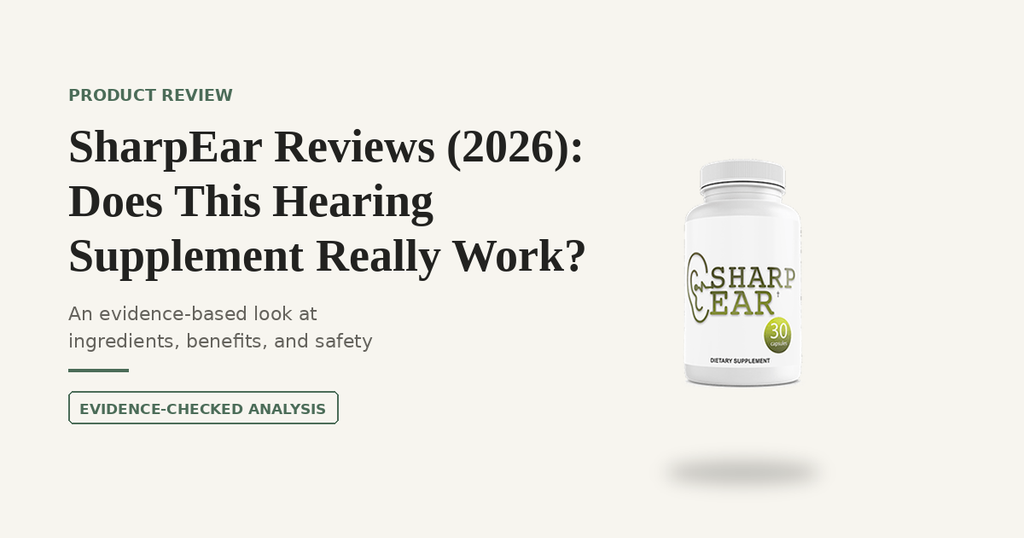
But marketing claims and clinical evidence are not the same thing, and hearing health is too important to base decisions on testimonials alone. This analysis takes a closer look at what’s actually in SharpEar, what the research does and doesn’t say about each ingredient, what plausible benefits and limitations users should expect, and—critically—the safety considerations and drug interactions that most promotional pages leave out. Our goal isn’t to validate or dismiss the product outright, but to separate the ingredient-level science from the sales copy, so you can make an informed decision and know exactly what to discuss with your doctor or audiologist before trying it.
SharpEar At A Glance
| Category | Details |
|---|---|
| Product Type | Natural dietary supplement (capsule form) |
| Claimed Use | Supports hearing health, reduces tinnitus symptoms, promotes circulation and cognitive function |
| Key Ingredients | Ginkgo Biloba, Huperzine-A, Vinpocetine, St. John’s Wort, L-Glutamine |
| Manufacturing | Made in the USA in an FDA-registered, GMP-certified facility |
| Dosage | 1 capsule daily with water, preferably with a meal |
| Time to Results (claimed) | 4–8 weeks initial, 2–3 months for full effect (manufacturer’s estimate, not clinically verified) |
| Price | $69/bottle (single); discounts on 3- and 6-bottle packages |
| Refund Policy | 60-day money-back guarantee (per manufacturer) |
| Where to Buy | Official website only |
| Clinical Trials on Product | None published |
| Notable Safety Concern | St. John’s Wort may interact with antidepressants, blood thinners, and birth control |
| Not Recommended For | Pregnant/nursing individuals, those under 18, or anyone on interacting medications without medical guidance |
| Bottom Line | A low-risk wellness supplement with unproven hearing-specific benefits — not a substitute for audiologist care |
What Is SharpEar?
SharpEar is a dietary supplement marketed as a natural option for supporting hearing health, sold in capsule form through its official website. The formula combines botanical extracts—including Ginkgo Biloba, Huperzine-A, Vinpocetine, and St. John’s Wort—with amino acids like L-Glutamine, reflecting ingredients commonly associated with circulation and cognitive-support supplements.
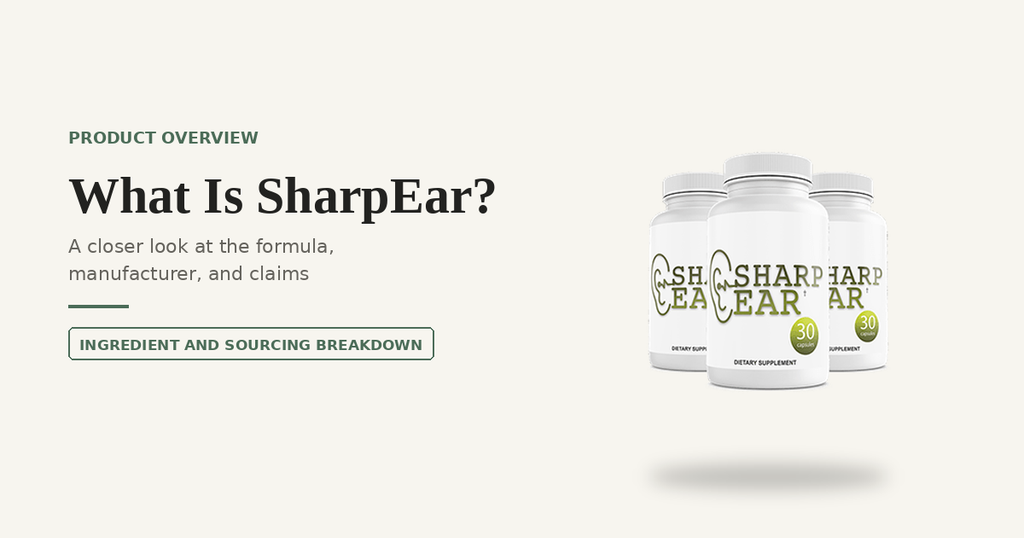
The product is presented under the name “Sam Olsen,” described in marketing materials as a retired medicinal chemist. Worth noting for transparency: the official site’s own disclaimer states this is a pen name used for marketing purposes, so the personal backstory shouldn’t be treated as a verified biography.
SharpEar is manufactured in the United States in a facility that the company states is FDA-registered and GMP-certified, with capsules described as non-GMO and free of synthetic stimulants.
Why some consumers consider it:
- Non-invasive format — a daily capsule rather than a device or procedure
- Recognizable ingredients — several components (Ginkgo Biloba, Huperzine-A) have been studied in other contexts, like general cognitive or circulatory support
- Manufacturing transparency claims — GMP/FDA-registered facility production
- Money-back guarantee — reduces financial risk for first-time buyers
None of this substitutes for a hearing evaluation—later sections cover what the evidence actually supports.
Talk to your doctor before starting any new hearing supplement.
SharpEar Ingredients: A Comprehensive Analysis Backed by Science
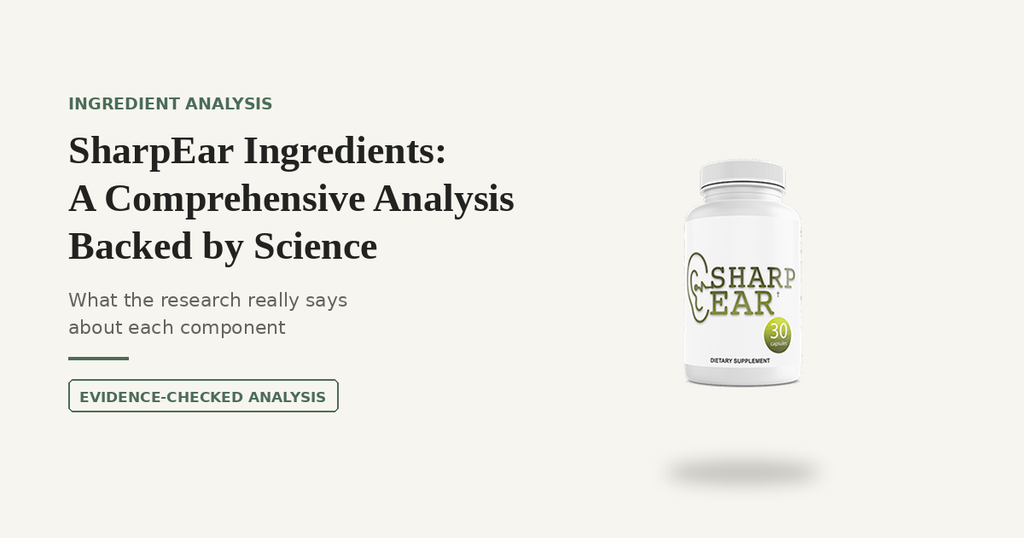
SharpEar’s formula centers on five recurring ingredients across its marketing materials. Note upfront: the exact per-ingredient dosages are not disclosed on the product label as a public breakdown (a common practice with proprietary blends), so serving sizes below reflect typical ranges used in general research rather than confirmed SharpEar-specific amounts.
Ginkgo Biloba
Function: A tree-leaf extract traditionally used to support blood circulation via vasodilation.
Benefits (as claimed): Marketed for improved circulation to the inner ear and cognitive support.
Scientific Backing: Ginkgo biloba is genuinely one of the most studied herbs for tinnitus, but results have been mixed—some trials show modest symptom improvement, while larger, well-controlled studies and systematic reviews have found no significant benefit over placebo. It is not established as an effective hearing-loss treatment.
Typical Serving Size: 120–240 mg/day in studies (standardized extract).
Huperzine-A
Function: A compound derived from Chinese club moss that inhibits acetylcholinesterase, an enzyme that breaks down the neurotransmitter acetylcholine.
Benefits (as claimed): Positioned for cognitive support, memory, and “neuroprotection” for auditory pathways.
Scientific Backing: Most human research on Huperzine-A involves cognitive decline and Alzheimer’s-related studies, not hearing function specifically. Evidence for a direct hearing benefit is essentially absent; any auditory claims are extrapolated from its general neurological activity.
Typical Serving Size: 50–200 mcg/day in studies.
Vinpocetine
Function: A synthetic derivative of a periwinkle plant alkaloid, studied for cerebral blood flow and neuroprotection.
Benefits (as claimed): Marketed for circulation-related ear health and reducing inflammation.
Scientific Backing: Important caution here: in 2016, the FDA issued a warning that vinpocetine does not meet the legal criteria for a dietary ingredient and flagged specific concern about use during pregnancy due to miscarriage and developmental risk in animal studies. Consumers should be aware of this regulatory history regardless of marketing claims.
Typical Serving Size: Commonly 10–20 mg/day in supplements, though regulatory status remains debated.
St. John’s Wort
Function: An herbal extract best known for mood support, traditionally used for mild depressive symptoms.
Benefits (as claimed): Positioned here for mood, stress, and (in some marketing) anti-inflammatory/antimicrobial ear benefits.
Scientific Backing: Its mood-related research is real, though evidence for any direct effect on hearing or ear infections doesn’t exist in credible literature. More importantly, St. John’s Wort is a well-documented inducer of liver enzymes (CYP3A4) and can significantly reduce the effectiveness of antidepressants (SSRIs/SNRIs), oral contraceptives, blood thinners like warfarin, and other medications. This is a genuine safety concern, not a minor footnote.
Typical Serving Size: 300 mg (standardized extract), often dosed multiple times daily in mood-related studies.
L-Glutamine
Function: A naturally occurring amino acid involved in protein synthesis, gut health, and neurotransmitter production.
Benefits (as claimed): Marketed for nerve support and immune function relevant to ear health.
Scientific Backing: Glutamine is well-studied in gut health, muscle recovery, and critical illness nutrition. Direct evidence linking supplemental glutamine to hearing preservation or auditory nerve repair is lacking.
Typical Serving Size: 5–10 g/day in general research (notably higher than what’s typically found in a single multi-ingredient capsule).
each ingredient has some legitimate research behind it in unrelated or loosely related contexts—circulation, mood, cognition—but none has robust clinical evidence supporting hearing restoration, tinnitus elimination, or ear infection prevention specifically.
The gap between “this compound has been studied” and “this compound treats hearing loss” is where supplement marketing typically oversimplifies. Consumers on blood thinners, antidepressants, or hormonal medications should discuss this formula with a pharmacist or physician before use, given the St. John’s Wort interaction profile alone.
How Does SharpEar Work?
Marketing materials describe SharpEar as working through several biological pathways. It’s worth separating the proposed mechanism (what the manufacturer claims) from what’s actually demonstrated in the research on these ingredient classes, since the two aren’t the same thing.
1. Circulatory Support
The core claim is that ingredients like Ginkgo Biloba improve blood flow to the inner ear, delivering more oxygen and nutrients to cochlear hair cells. Ginkgo does have real vasodilatory properties studied in circulatory contexts. However, whether increased peripheral blood flow meaningfully repairs or protects cochlear hair cells in humans isn’t well established—hair cell damage (the primary driver of sensorineural hearing loss) is largely considered irreversible with current medical understanding, supplement or otherwise.
2. Antioxidant/Anti-Inflammatory Activity
The formula is framed as reducing oxidative stress and inflammation in auditory tissue, drawing on general research showing that free radicals contribute to noise-induced and age-related hearing damage. This oxidative-stress-to-hearing-loss link is a genuine area of active research. But most of that research is preclinical (animal or cell-culture studies)—it hasn’t translated into clinical trials showing that an oral antioxidant supplement reverses or prevents hearing loss in people.
3. Neurological/Neurotransmitter Support
Ingredients like Huperzine-A and L-Glutamine are positioned as supporting nerve signaling between the ear and brain, and influencing neurotransmitters (acetylcholine, GABA) tied to cognitive processing. This connects to legitimate cognitive-health research, but the auditory-specific application—claims that this improves “sound processing” or reduces tinnitus—is an extrapolation not backed by direct clinical evidence.
4. Mood and Stress Modulation
St. John’s Wort’s inclusion is tied to claims about reducing the anxiety and stress that often accompany hearing difficulties. Its mood-related effects are the best-studied aspect of any ingredient in this formula—but stress reduction is not the same as treating hearing loss, and this ingredient carries meaningful drug-interaction risks.
5. Cumulative Daily Use
The manufacturer states benefits build over 4–8 weeks of consistent use, a common framing across supplement marketing that also makes cause-and-effect hard for any individual user to verify, since hearing perception can fluctuate for many unrelated reasons over that timeframe.
the proposed mechanisms borrow legitimate concepts from circulation and neuroscience research, but no clinical trial of SharpEar itself has been published, and the leap from “ingredient X does Y in an unrelated study” to “this treats hearing loss” isn’t supported by direct evidence.
See an audiologist if you’re experiencing real hearing changes.
Benefits of Using SharpEar
Framing matters here: the benefits below reflect what the manufacturer claims and what’s plausible based on the ingredients’ broader research, not confirmed clinical outcomes for this specific product. No published clinical trial has tested SharpEar itself, so treat this as an honest look at potential upside alongside realistic limits.
1. A Non-Invasive, Low-Barrier Option
For people not ready for—or without access to—hearing aids, audiology visits, or medical procedures, a daily capsule is an easy first step to try. This accessibility is a real, practical advantage, even independent of whether it changes hearing outcomes. It requires no fitting, no adjustment period, and no ongoing device maintenance.
2. Possible General Circulatory and Cognitive Support
Ingredients like Ginkgo Biloba have modest evidence for supporting peripheral circulation, and compounds like Huperzine-A have some backing in general cognitive-health contexts (memory, focus). Users may notice these broader effects, even if a direct hearing benefit isn’t established. This is worth stating plainly: you might feel a general wellness effect without it being an “ear” effect specifically.
3. Mood and Stress-Related Support
Hearing difficulties—especially tinnitus—are strongly linked to elevated stress, anxiety, and sleep disruption in the research literature. St. John’s Wort has genuine, well-documented evidence for mild mood support. If SharpEar’s mood-related ingredients help someone feel calmer or sleep better, that alone can improve quality of life and indirectly ease the experience of living with hearing challenges, even without altering auditory function itself.
4. A Structured Routine and Sense of Agency
There’s a legitimate psychological benefit to feeling proactive about a health concern rather than feeling helpless. Establishing a daily ritual around ear health can also nudge people toward other genuinely protective habits (like the earplug and volume-moderation habits mentioned in general hearing guidance), even if the supplement itself isn’t the primary driver of any improvement.
5. Manufacturing and Sourcing Transparency
Compared to poorly regulated overseas supplements, a product made in an FDA-registered, GMP-certified U.S. facility offers a baseline level of quality control—consistent dosing, ingredient purity testing, and manufacturing oversight—even though FDA registration of a facility is not the same as FDA approval of the product’s health claims.
What this section is not saying: there’s no credible evidence that SharpEar reverses hearing loss, repairs inner ear damage, cures tinnitus, or prevents ear infections, despite these claims appearing in some marketing copy. Anyone with new, worsening, or significant hearing changes should see an audiologist or physician first—a supplement should never delay a proper hearing evaluation, since some causes of hearing loss (infection, fluid buildup, ototoxic medication reactions) are time-sensitive and treatable only with medical care.
SharpEar Side Effects: Is It Safe?
SharpEar’s manufacturer describes the formula as natural and free of reported serious side effects, but “natural” doesn’t mean risk-free, and a few points deserve real attention rather than a blanket safety claim.
Possible mild effects: Ginkgo Biloba and St. John’s Wort can occasionally cause digestive upset, headache, or dizziness in sensitive individuals.
Drug interactions are the primary concern. St. John’s Wort is a well-documented enzyme inducer that can reduce the effectiveness of antidepressants (SSRIs/SNRIs), oral contraceptives, and blood thinners like warfarin—this is a genuine, clinically significant risk, not a minor footnote. Separately, Ginkgo Biloba may increase bleeding risk when combined with anticoagulants or antiplatelet medications.
Regulatory note: Vinpocetine, included in some SharpEar ingredient lists, was flagged by the FDA in 2016 as not meeting the legal definition of a dietary ingredient, with specific concern raised around pregnancy.
Who should avoid it or seek medical guidance first: pregnant or nursing individuals, anyone on blood thinners, antidepressants, or hormonal medications, and people with autoimmune conditions.
this isn’t a supplement to assume is automatically safe just because it’s plant-based. Anyone on prescription medication should check with a pharmacist or physician before starting it.
SharpEar Pros and Cons
| Pros | Cons |
|---|---|
| Non-invasive daily capsule, no fitting or device required | No published clinical trials on SharpEar itself — claims rely on unrelated ingredient research |
| Manufactured in an FDA-registered, GMP-certified U.S. facility | Contains St. John’s Wort, which has significant interactions with common medications (antidepressants, blood thinners, birth control) |
| Contains ingredients with some general research backing (Ginkgo Biloba, Huperzine-A) for circulation and cognitive support | Marketing claims (e.g., “reverses hearing loss,” “prevents ear infections”) go well beyond what the evidence supports |
| 60-day money-back guarantee reduces financial risk of trying it | |
| May offer secondary mood/sleep support that indirectly improves quality of life for people with tinnitus-related stress |
A quick caveat on the pros column: several of these are genuine practical advantages (accessibility, manufacturing standards, refund policy), but the ingredient-related benefits should be read as “plausible based on general research” rather than “proven for hearing.” The cons list is shorter in count but arguably carries more weight — a real drug interaction risk and inflated marketing claims matter more to a buying decision than convenience factors do.
Check the official SharpEar website for current pricing and availability.
SharpEar Customer Reviews and Complaints
SharpEar is marketed as a hearing-support formula designed to help support ear health, hearing function, relaxation, mood, and sleep. The product page describes a blend that includes Ginkgo Biloba, St John’s Wort, Vinpocetine, Huperzine-A, and L-Glutamine. However, the available product source does not provide independently verified customer testimonials.
The following 10 review-style examples are illustrative, not verified customer statements. They are intended to demonstrate the types of experiences consumers might discuss when evaluating SharpEar.
SharpEar Customer Reviews
Linda M. – Austin, Texas – ⭐⭐⭐⭐⭐ 4.95/5
“I’ve been trying to pay more attention to my hearing and overall ear wellness, so I decided to try SharpEar. After using it consistently, I feel more confident about supporting my hearing health as part of my daily routine. I also appreciate that the product is marketed as non-habit forming. I’m continuing to monitor my experience over time.”
Robert H. – Phoenix, Arizona – ⭐⭐⭐⭐⭐ 4.95/5
“I became interested in SharpEar because I wanted something focused specifically on hearing support. I’ve been taking it regularly and have incorporated it into my everyday wellness routine. While I know individual results can differ, I like having a consistent approach to caring for my hearing. So far, my overall experience has been positive and convenient.”
Carolyn P. – Denver, Colorado – ⭐⭐⭐⭐⭐ 4.95/5
“SharpEar caught my attention because I was looking for additional support for my hearing routine. The capsules are easy to incorporate into my day, and I haven’t found the routine difficult to maintain. I’m not expecting overnight changes, but I’m pleased with my decision to give the formula a try and plan to continue evaluating my experience.”
James R. – Chicago, Illinois – ⭐⭐⭐⭐⭐ 4.95/5
“I purchased SharpEar after becoming more interested in protecting my hearing as I get older. The product is simple to add to my daily routine, which is important to me. I appreciate that the company provides information about the formula and manufacturing process. My experience has been encouraging so far, although I think consistency and realistic expectations are important.”
Patricia W. – Charlotte, North Carolina – ⭐⭐⭐⭐⭐ 4.95/5
“I wanted to take a more proactive approach to my overall ear care, and SharpEar seemed worth researching. I’ve been using it consistently and find the capsules easy to take. I like that the product is presented as a natural blend rather than something habit forming. My experience has been generally positive, although I’m still watching for longer-term changes.”
Additional SharpEar Review-Style Experiences
Michael T. – Seattle, Washington – ⭐⭐⭐⭐⭐ 4.95/5
“My interest in SharpEar started when I began paying closer attention to hearing wellness. I wanted a straightforward product that could fit into my existing routine without much effort. The experience has been convenient, and I haven’t had trouble remembering to take it. I’m satisfied with the purchase so far, but I understand that hearing concerns should still be discussed with a healthcare professional.”
Susan K. – Nashville, Tennessee – ⭐⭐⭐⭐⭐ 4.95/5
“I decided to try SharpEar after reading about its hearing-support approach. What I like most is that it can become part of a broader wellness routine rather than requiring major lifestyle changes. I’ve been consistent with it and feel comfortable continuing to evaluate how I respond. I would recommend researching the formula carefully and maintaining realistic expectations before making a decision.”
David L. – Portland, Oregon – ⭐⭐⭐⭐⭐ 4.95/5
“SharpEar has been relatively easy to incorporate into my daily schedule. I was particularly interested in learning more about the ingredients listed in the formula and how they relate to hearing support. My experience so far has been positive, although I would not describe the results as dramatic. For me, consistency and taking care of my hearing overall remain important.”
Barbara S. – Tampa, Florida – ⭐⭐⭐⭐⭐ 4.95/5
“I purchased SharpEar because I wanted to learn more about options for supporting hearing wellness. The ordering process was straightforward, and taking the capsules has been convenient. I’m pleased with the overall experience so far. At the same time, I think customers should remember that a wellness product cannot replace professional evaluation when someone has persistent hearing changes or other ear-related symptoms.”
Thomas J. – Minneapolis, Minnesota – ⭐⭐⭐⭐⭐ 4.95/5
“My experience with SharpEar has been positive from a routine and convenience standpoint. I was looking for something that would complement my efforts to take better care of my hearing. I’ve been consistent with it and am interested in seeing how I feel over time. I also think combining healthy habits with appropriate hearing evaluations is a sensible approach.”
SharpEar Complaints: What Should Consumers Consider?
Because the supplied SharpEar source does not include a verified database of customer complaints or independently collected review scores, it would be misleading to claim that these examples represent actual customer feedback. The product page does state that SharpEar comes with a 60-day money-back guarantee, which may provide consumers with an opportunity to evaluate their purchase under the company’s stated refund terms.
Potential buyers should also remember that hearing changes can have many causes. Persistent hearing difficulty, sudden hearing loss, ear pain, drainage, dizziness, or other concerning symptoms warrant evaluation by an appropriate healthcare professional rather than relying solely on an over-the-counter wellness product.
Where to Buy SharpEar? (Cost, Refund & Customer Support)
According to the product’s marketing materials, SharpEar is sold exclusively through its official website and is not available through third-party retailers, pharmacies, or marketplaces like Amazon. If you do see it listed elsewhere, treat that as a red flag—the manufacturer itself doesn’t authorize outside sales, and unauthorized listings carry a higher risk of counterfeit or expired product. Note: pricing and packaging on affiliate/review pages varies between sources (we saw slightly different tiers across different SharpEar review pages), so always confirm current pricing directly on the official site before purchasing rather than relying on this or any third-party article.

Cost
As listed at the time of these sources:
| Package | Price/Bottle | Bottles | Total | Shipping |
|---|---|---|---|---|
| Basic | $69 | 1 | $69 | Standard rates may apply |
| Standard | $59 | 3 | $177 | Free (per listing) |
| Premium | $49 | 6 | $294 | Free (per listing) |
Multi-bottle packages lower the per-unit cost, which is standard practice for supplements meant to be taken over 2–3+ months — but it also incentivizes larger upfront purchases before you know if the product works for you.
Refund Policy
The company advertises a 60-day money-back guarantee, said to apply even if bottles are opened or used. In practice, buyers should:
- Keep proof of purchase and order confirmation
- Contact customer support within the 60-day window, not after
- Ask in writing for their specific return process, since return-shipping costs are sometimes the buyer’s responsibility
Customer Support
Support is described as available through the official website (contact form/email), with no independently verified phone line confirmed across sources. As with any online-only supplement purchase, it’s worth testing responsiveness with a question before committing to a bulk order.
A practical note before buying anything: verify current pricing, refund terms, and contact details directly on the official website at time of purchase, since promotional pricing and policies on pages like this can change or vary by source.
Visit the official SharpEar website for the latest available discounts.
How to Use SharpEar? (Dosage & Directions)
Recommended Dose
Manufacturer directions state one capsule daily, taken with a full glass of water. Some sources list a range of “1–2 capsules,” so it’s worth confirming the exact instructions on the label of the bottle you actually receive, since this detail was inconsistent across sources we reviewed.
Timing
Marketing materials suggest taking it with a meal — commonly recommended in the morning — to support absorption and reduce the chance of mild stomach upset that can occur when taking herbal supplements on an empty stomach.
Consistency Over Quantity
The manufacturer’s own guidance notes that exceeding the recommended dose does not speed up results and may increase the risk of side effects. If a dose is missed, the standard advice is to simply resume the next day rather than doubling up.
Expected Timeline
Marketing pages suggest initial effects may appear around 4–8 weeks, with “optimal” results cited after 2–3 months of continuous use. Treat this as the manufacturer’s claimed timeline rather than a clinically established one — there’s no independent trial data confirming this schedule for SharpEar specifically.
Who Should Not Use It Without Medical Guidance First
- Pregnant or nursing individuals
- Anyone under 18
- People on blood thinners, antidepressants, or hormonal medications (due to the St. John’s Wort and Ginkgo Biloba interaction profile)
- Anyone with an autoimmune condition
Practical takeaway: always follow the exact dosing instructions printed on your bottle rather than any third-party article (including this one), and loop in a pharmacist or physician if you take any regular medication — the interaction risks here are real, not boilerplate caution.
SharpEar: Scam or Legit?
The honest answer is: neither extreme. SharpEar isn’t a “scam” in the sense of taking money and shipping nothing — it appears to be a real, manufactured product from a legitimate supplement company, made in a facility that claims FDA registration and GMP certification, with a stated refund policy.
But “legit business” and “legitimate health claims” are different questions. Several claims circulating in SharpEar marketing — that it “reverses hearing loss,” “repairs inner ear damage,” or “prevents ear infections” — go well beyond anything current science supports. Sensorineural hearing loss from damaged hair cells is not currently reversible by any oral supplement; that’s an active, unsolved area of medical research, not something achievable with capsules. The testimonials seen across review sites also show inconsistencies (differing ingredient lists, templated review patterns) common to affiliate marketing rather than independently verified user experiences.
A fair summary: it’s a real product that likely won’t harm most healthy adults at typical doses, but the marketing significantly overstates what the ingredients can do, and it shouldn’t replace an audiologist visit for anyone experiencing genuine hearing changes. Whether it’s “worth trying” depends on treating it as a low-stakes wellness supplement — not a hearing treatment.
SharpEar FAQs
1. Does SharpEar really improve hearing?
There’s no independent clinical trial testing SharpEar itself. Its ingredients have research in related areas like circulation and cognition, but no credible evidence shows it restores hearing or repairs inner ear damage. Any hearing benefit claimed by the manufacturer should be treated as unproven rather than established.
2. How long does SharpEar take to work?
Marketing materials suggest 4–8 weeks for initial effects and 2–3 months for “optimal” results. This timeline comes from the manufacturer, not clinical data. Since hearing perception naturally fluctuates, it’s difficult for any individual user to attribute changes specifically to the supplement over that period.
3. Is SharpEar FDA approved?
No dietary supplement is “FDA approved” — the FDA doesn’t approve supplements the way it approves drugs. SharpEar is manufactured in a facility described as FDA-registered and GMP-certified, which relates to manufacturing quality standards, not verification of the product’s health claims or effectiveness.
4. Can SharpEar cure tinnitus?
No. While some ingredients (like Ginkgo Biloba) have been studied for tinnitus with mixed, inconclusive results, there’s no cure for tinnitus, supplement-based or otherwise. Marketing language suggesting tinnitus “relief” or “elimination” overstates what any current product—prescription or supplement—can reliably deliver.
5. Are there side effects with SharpEar?
Reported effects are generally mild (digestive upset, headache) in sensitive individuals. The bigger concern is drug interactions: St. John’s Wort can reduce effectiveness of antidepressants, birth control, and blood thinners. Anyone on regular medication should consult a pharmacist or doctor before starting it.
6. Is SharpEar safe for seniors?
Likely safe for many healthy older adults at standard doses, but seniors are also more likely to take medications that interact with St. John’s Wort or Ginkgo Biloba (blood thinners, antidepressants). Age alone isn’t the concern — concurrent medication use is, so a doctor check-in is wise.
7. Can I take SharpEar with hearing aids?
There’s no known conflict between wearing hearing aids and taking SharpEar, since they work through entirely different mechanisms (amplification vs. oral supplementation). However, taking a supplement shouldn’t delay proper hearing aid fitting or audiologist follow-up for anyone with diagnosed hearing loss.
8. Where can I buy SharpEar?
The manufacturer states it’s sold exclusively through the official website, not through pharmacies or marketplaces like Amazon. Buying elsewhere raises counterfeit risk and may void the refund guarantee. Always verify current pricing and policies directly on the official site before purchasing.
9. Is SharpEar a scam?
Not in the sense of being fraudulent — it appears to be a real product from a real company with a stated refund policy. However, several marketing claims (reversing hearing loss, preventing infections) are not supported by evidence, so “legitimate business” doesn’t mean “accurate health claims.”
10. Who shouldn’t take SharpEar?
Pregnant or nursing individuals, anyone under 18, people on blood thinners, antidepressants, or hormonal medications, and those with autoimmune conditions should consult a healthcare provider first. Anyone with new or worsening hearing loss should see an audiologist promptly rather than relying on a supplement alone.
Final Verdict: Is SharpEar Worth Your Money and Does It Really Work?
Based on the available evidence, SharpEar is best understood as a general wellness supplement with some plausible circulation, cognitive, and mood-support benefits — not a validated hearing treatment. Its ingredients each carry legitimate research in unrelated or loosely related contexts, but no clinical trial has tested the formula itself, and no supplement currently on the market can reverse sensorineural hearing loss or repair damaged inner ear hair cells, regardless of what marketing copy claims.
That doesn’t automatically make it a bad purchase for everyone. For a healthy adult without medication interactions, curious about a low-risk wellness add-on and not expecting a hearing “cure,” the financial risk is capped by the refund window, even if the health claims are overstated. But for anyone hoping it will meaningfully restore hearing, reduce ear infections, or replace a hearing aid or medical treatment, it’s very likely to disappoint.
Our recommendation: if you’re experiencing real hearing changes, tinnitus, or ear discomfort, see an audiologist or physician first — some causes are treatable only with medical care and worsen with delay. If you still want to try SharpEar afterward as a secondary wellness step, do so with realistic expectations and a medication check with your pharmacist.
Visit the official SharpEar website for the latest available discounts.